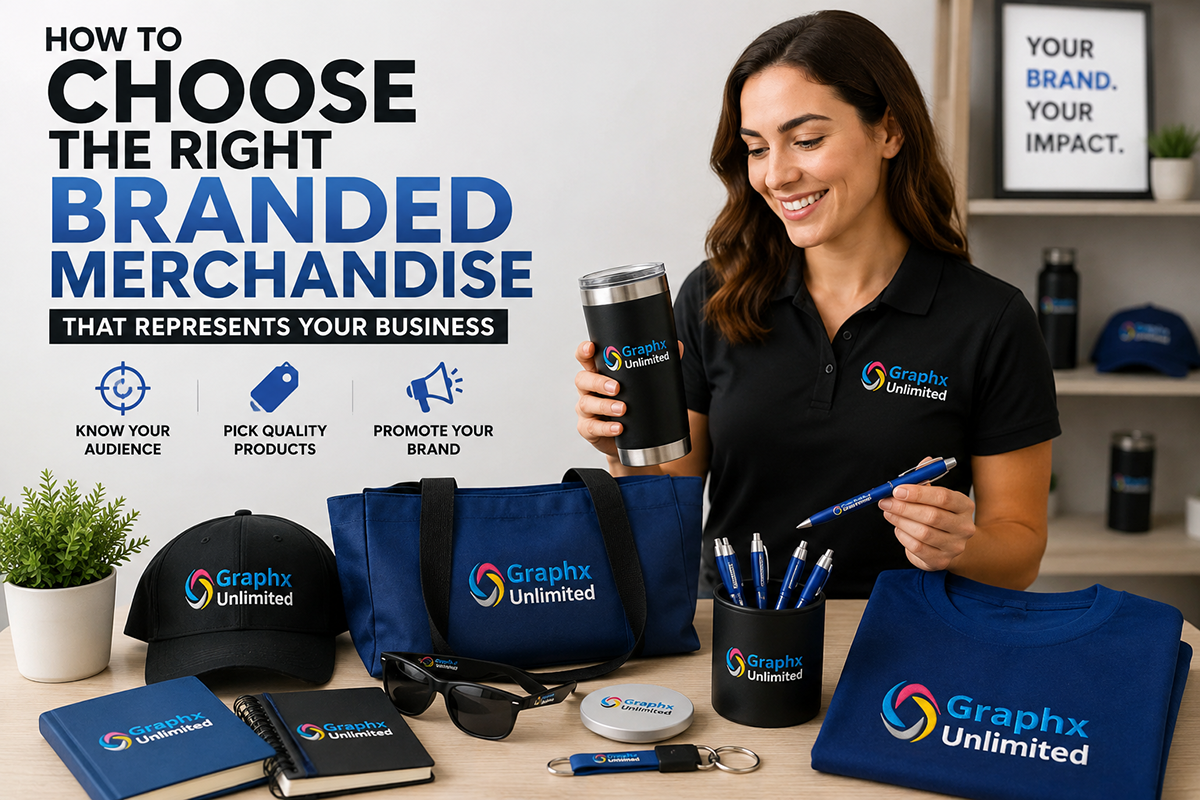
How Do I Choose the Right Branded Merchandise for My Business?
Branded merchandise can help your company remain visible long after a customer interaction, trade show, employee event, or promotional campaign ends. However, ordering products simply because they are inexpensive or popular does not guarantee that people will use them.
To choose the right branded merchandise, you need to consider your audience, campaign goal, budget, brand identity, product quality, and distribution plan. The best promotional product is not necessarily the most expensive item. It is the item that makes sense for the recipient and provides enough value to be kept and used.
A practical product such as a tumbler, tote bag, T-shirt, notebook, or pen can create repeated brand exposure. An unsuitable or poorly made product may be forgotten, discarded, or associated with a negative customer experience.
This guide explains how to select custom promotional products that support your marketing goals and represent your business professionally.
Why Is Branded Merchandise Effective?
Branded merchandise places your company’s identity on a physical product that customers, employees, and community members can use.
Unlike a temporary digital advertisement, a useful promotional product can remain visible for months or years. Each time someone wears a branded shirt, carries a tote bag, drinks from a custom tumbler, or uses a promotional pen, your business receives another opportunity to be noticed.
Branded merchandise can help businesses:
- Increase brand recognition
- Reward loyal customers
- Attract attention at events
- Improve employee engagement
- Encourage referrals
- Support product launches
- Create memorable customer gifts
- Maintain consistent branding
- Build stronger community relationships
The effectiveness of the product depends heavily on whether people genuinely want to use it.
How to Choose the Right Branded Merchandise
Before comparing individual products, define what the merchandise needs to accomplish.
A trade-show giveaway has a different purpose from an employee-appreciation gift. A low-cost pen may be appropriate for a large community event, while a high-quality embroidered jacket may be better for a company milestone or employee award.
Use the following steps to narrow your choices.
1. Define the Goal of Your Promotional Campaign
Start by identifying one primary objective.
Your goal may be to:
- Increase local brand awareness
- Generate leads at a trade show
- Thank existing customers
- Introduce a new product
- Promote a grand opening
- Reward employees
- Create staff uniforms
- Encourage customer referrals
- Support a fundraiser
- Build recognition in the community
Your objective influences the product, quantity, quality level, decoration method, and call to action.
For example, a trade-show giveaway should be lightweight, easy to distribute, and affordable in larger quantities. A customer-appreciation gift should feel more personal and valuable.
Without a clear goal, businesses often order random products that do not support a broader marketing strategy.
2. Understand Your Target Audience
The most important question is not, “What product do I like?” It is, “What product will my audience use?”
Consider your recipients’:
- Age range
- Profession
- Lifestyle
- Location
- Interests
- Daily routine
- Work environment
- Travel habits
- Technology use
- Product preferences
A fitness company may benefit from branded water bottles, performance shirts, gym towels, or drawstring bags. A real estate agency might choose tumblers, tote bags, notebooks, pens, or house-shaped keychains.
A construction company could use work shirts, safety apparel, hats, measuring tapes, flashlights, or insulated drinkware. A professional office may prefer portfolios, premium pens, notebooks, desk accessories, or charging products.
The closer the product matches the recipient’s routine, the more likely it is to be used repeatedly.
3. Select Products That Relate to Your Business
Promotional merchandise becomes more memorable when the product connects naturally to the company.
Examples include:
- A landscaping company giving away garden gloves
- A coffee shop offering branded travel mugs
- A fitness center using water bottles and athletic shirts
- A technology company providing charging cables
- A realtor distributing notebooks, tote bags, and keychains
- A restaurant offering reusable cups or insulated food bags
- An automotive business using ice scrapers or key tags
- A pet-care company providing bowls, leashes, or waste-bag holders
The item does not need to represent your service literally, but there should be a logical connection between the product, audience, and brand.
This helps the merchandise feel intentional rather than generic.
4. Choose Useful Branded Merchandise
Usefulness is one of the strongest predictors of whether a promotional product will be kept.
Popular practical products include:
Branded Drinkware
Tumblers, travel mugs, ceramic mugs, and water bottles can be used at work, at home, in vehicles, and at events.
Drinkware works well for:
- Customer gifts
- Employee welcome packages
- Conferences
- Wellness campaigns
- School programs
- Fitness businesses
Choose a size and style that matches the audience. Commuters may appreciate an insulated tumbler, while athletes may prefer a lightweight water bottle.
Custom Apparel
T-shirts, polo shirts, hoodies, hats, jackets, and performance apparel can provide public brand exposure.
Custom apparel is particularly effective for:
- Employee uniforms
- Community events
- Fundraisers
- Sports teams
- Restaurants
- Construction crews
- Customer giveaways
The garment should be comfortable and attractive enough that someone would choose to wear it even without the promotional purpose.
Tote Bags and Backpacks
Reusable tote bags provide a large decoration area and can carry additional promotional materials.
They are useful for:
- Trade shows
- Retail stores
- Schools
- Conferences
- Farmers markets
- Community events
- Real estate campaigns
Consider how much weight the bag needs to hold. A lightweight event tote serves a different purpose from a durable canvas shopping bag or laptop backpack.
Pens and Notebooks
Pens, notebooks, sticky-note sets, and journals are practical for offices, schools, conferences, healthcare providers, and professional-service businesses.
A budget-friendly pen may suit a large event, while a premium metal pen or bound journal may be better for important customers and employees.
Technology Accessories
Useful technology products include:
- Charging cables
- Wireless chargers
- Phone stands
- Power banks
- Cable organizers
- Webcam covers
- Screen-cleaning cloths
Technology products can feel modern and valuable, but quality is especially important. An unreliable charger can create a worse impression than no giveaway at all.
5. Match the Product to Your Budget
Budgeting for branded merchandise involves more than multiplying the unit price by the quantity.
Your total may include:
- Product cost
- Setup charges
- Artwork preparation
- Printing or embroidery
- Multiple imprint colors
- Individual personalization
- Shipping
- Packaging
- Rush production
- Distribution
A less expensive product is not always the most economical option. A product that costs slightly more but remains in use for years may deliver better long-term value than a cheap item that is quickly discarded.
Separate your campaign into quality levels when necessary.
For example:
- Economical pens for a large community event
- Mid-range tote bags for trade-show attendees
- Premium tumblers for loyal customers
- Embroidered jackets for employees
This approach allows the merchandise to match both the recipient and the importance of the interaction.
6. Prioritize Quality Over Quantity
Every promotional product represents your company.
A shirt that shrinks badly, a pen that stops working, or a tumbler that leaks can create a negative association with the business.
You do not always need the most expensive product available. However, you should choose an item that performs its basic function reliably.
Before placing a large order, consider requesting a sample. Test:
- Material quality
- Product durability
- Size and fit
- Print clarity
- Embroidery quality
- Lid or closure performance
- Color accuracy
- Packaging
- Overall appearance
Samples are especially valuable when ordering apparel, drinkware, bags, technology accessories, or high-value customer gifts.
7. Consider Where the Product Will Be Used
Some merchandise creates private brand exposure, while other products are regularly used in public.
Items with strong public visibility include:
- T-shirts
- Hats
- Jackets
- Tote bags
- Backpacks
- Umbrellas
- Travel mugs
- Water bottles
Desk accessories, notebooks, and pens may remain within an office but can still provide repeated impressions among customers, employees, and coworkers.
Consider whether your main goal is broad visibility, frequent personal use, or perceived gift value.
A promotional jacket may reach fewer recipients than a pen, but each jacket may create more visible and longer-lasting exposure.
8. Keep the Branding Clear and Simple
A promotional product has limited decoration space. Trying to include too much information can make the design difficult to read.
Prioritize:
- Your company name
- A recognizable logo
- A short website address
- A brief slogan
- A phone number when appropriate
Avoid placing a full service list, street address, multiple social media accounts, and a long marketing message on a small item.
The product should still look appealing when branded.
A subtle logo on a high-quality shirt may receive more use than an oversized advertisement covering the entire garment.
9. Use Consistent Brand Colors and Artwork
Branded merchandise should match your website, signage, business cards, vehicle graphics, and other marketing materials.
Consistency helps customers recognize your company across different channels.
Before production, confirm that you have:
- A high-resolution logo
- Vector artwork when possible
- Approved brand colors
- Correct company information
- Consistent fonts
- Proper logo spacing
- Alternate logo versions for different backgrounds
Vector files such as AI, EPS, SVG, or vector PDF are usually preferred because they can be resized without losing quality.
GraphX Unlimited can help evaluate artwork and determine whether the logo is suitable for printing, embroidery, engraving, or another decoration method.
10. Choose the Right Decoration Method
Different promotional products require different decoration processes.
Screen Printing
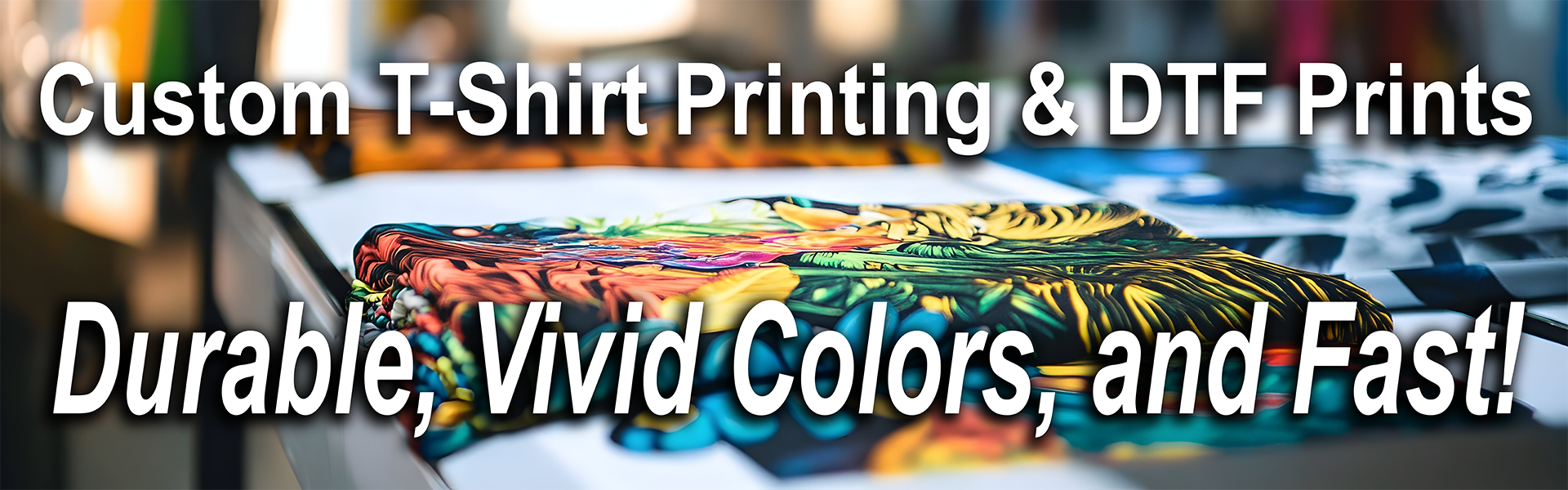
Screen printing is widely used for T-shirts, hoodies, tote bags, and larger apparel orders. It can provide bold, durable colors and is often cost-effective for higher quantities.
Direct-to-Film Printing
Direct-to-film printing can reproduce detailed, full-color artwork on apparel. It is useful for complex graphics, smaller orders, and designs with several colors.
Embroidery
Embroidery creates a professional, textured appearance on:
- Polo shirts
- Jackets
- Hats
- Bags
- Uniforms
Detailed logos may need to be simplified or digitized before embroidery.
Laser Engraving
Laser engraving works well for tumblers, plaques, keychains, cutting boards, awards, and selected metal or leatherette products.
Engraving creates a permanent appearance but usually does not reproduce full-color artwork.
Full-Color Printing
Full-color printing is suitable for products that need gradients, photographs, or complex branding.
The right method depends on the product material, quantity, logo, desired durability, and budget.
11. Think About the Season and Location
Promotional products should make sense for when and where they are distributed.
Florida businesses may benefit from:
- Water bottles
- Cooling towels
- Sunglasses
- Hats
- Beach bags
- Umbrellas
- Lightweight performance shirts
Holiday campaigns may use:
- Ornaments
- Gift sets
- Tumblers
- Food packages
- Blankets
- Engraved gifts
Outdoor winter apparel may be less useful for a Central Florida summer event, while a lightweight tote or insulated drink container could receive immediate use.
Seasonal relevance increases the likelihood that the product will be appreciated.
12. Determine the Correct Order Quantity
Ordering too few products may increase the cost per item or leave you without enough merchandise during an event. Ordering too many can create unnecessary storage and leave you with outdated branding.
Base the quantity on:
- Expected attendance
- Mailing-list size
- Number of employees
- Campaign duration
- Customer tiers
- Event schedule
- Storage capacity
- Future use
Always review minimum order quantities before selecting a product.
It may also be helpful to order a modest amount beyond the estimated need for replacement items, late attendees, future customers, or damaged products.
13. Plan How the Merchandise Will Be Distributed
A promotional product needs a clear distribution strategy.
Will it be:
- Handed out at an event?
- Included with a customer order?
- Mailed to clients?
- Used as an employee uniform?
- Given after a referral?
- Offered with a purchase?
- Included in a welcome package?
- Awarded through a social media promotion?
The distribution method affects the product’s weight, size, packaging, and cost.
A large ceramic mug may work well as an in-person customer gift but become expensive to mail. A lightweight postcard, sticker, magnet, or flat promotional item may be more suitable for a direct-mail campaign.
14. Include a Clear Marketing Purpose
Branded merchandise can display more than a logo. It can support a specific campaign.
Consider including:
- A QR code
- A short landing-page URL
- A campaign hashtag
- A referral message
- A promotional code
- An event date
- A brief call to action
However, the promotional information should not make the product unattractive.
A QR code may work well on packaging, an attached card, or a tote bag. It may be less effective on a heavily textured product or curved surface.
Always test QR codes before production.
Best Branded Merchandise by Business Type
The following examples can help businesses begin narrowing their choices.
Realtors and Property Professionals
- Tote bags
- Pens
- Notebooks
- Keychains
- Tumblers
- Calendars
- Moving checklists
- House-shaped promotional items
Restaurants and Food Businesses
- Reusable cups
- Tumblers
- T-shirts
- Hats
- Aprons
- Bottle openers
- Cooler bags
- Takeout accessories
Contractors and Home-Service Companies
- Work shirts
- Hats
- Flashlights
- Measuring tapes
- Coolers
- Tumblers
- Safety apparel
- Vehicle accessories
Healthcare and Wellness Businesses
- Water bottles
- Hand-sanitizer holders
- Tote bags
- Wellness journals
- Pens
- Fitness accessories
- Pill organizers
- Stress-relief products
Schools and Nonprofit Organizations
- T-shirts
- Drawstring bags
- Wristbands
- Water bottles
- Stickers
- Pens
- Event merchandise
- Fundraising products
Corporate and Professional Offices
- Portfolios
- Premium pens
- Notebooks
- Desk accessories
- Polo shirts
- Jackets
- Tumblers
- Technology products
Common Branded Merchandise Mistakes
Avoid these common problems when planning your order.
Choosing Products Based Only on Price
An inexpensive product has little marketing value when recipients do not use it.
Ignoring the Target Audience
A useful product for one group may be irrelevant to another.
Using Poor-Quality Artwork
Small website images may appear blurry or distorted when printed at a larger size.
Overcrowding the Design
Too much text reduces readability and makes the product feel like an advertisement rather than a gift.
Ordering Without a Sample
Product photos may not fully communicate the material, fit, size, or finish.
Forgetting Production Time
Artwork approval, product availability, printing, embroidery, shipping, and quality checks all require time.
Failing to Measure Results
Without tracking, it becomes difficult to determine which products and campaigns were most effective.
How to Measure the Results of Branded Merchandise
Promotional merchandise can support measurable marketing goals.
Track performance through:
- Unique QR codes
- Campaign-specific landing pages
- Promotional codes
- Referral forms
- Event registrations
- Customer surveys
- Website traffic
- Social media engagement
- Lead-source questions
You can also track how quickly products are distributed and which items generate the most positive responses.
Ask employees and customers which merchandise they would genuinely use. Their feedback can improve future orders.
Order Custom Branded Merchandise From GraphX Unlimited
GraphX Unlimited helps businesses select and customize promotional products that fit their audiences, campaigns, and budgets.
Available branding solutions may include:
- Custom T-shirts and apparel
- Embroidered polos and hats
- Branded drinkware
- Engraved tumblers
- Tote bags
- Promotional gifts
- Keychains
- Awards and plaques
- Printed marketing materials
- Signs and banners
- Vehicle graphics
Working with one local provider can also help keep your logo, colors, messaging, and overall brand appearance consistent across multiple products.
Whether you need economical items for a large event or premium gifts for employees and customers, GraphX Unlimited can help you compare materials, decoration methods, order quantities, and artwork requirements.
Contact GraphX Unlimited to discuss your audience, budget, deadline, and marketing goals before placing your next branded merchandise order.
Frequently Asked Questions About Branded Merchandise
What is the best branded merchandise for a small business?
Useful products such as shirts, pens, tote bags, tumblers, hats, and notebooks work well for many small businesses. The strongest choice depends on the audience and campaign goal.
How much should I spend on promotional products?
Your budget should reflect the number of recipients, the importance of the interaction, and the desired quality. Large events may require economical products, while employee or customer gifts may justify a higher cost per item.
Should I put my phone number on branded merchandise?
Include a phone number when it is useful and easy to read. On small products, a clear logo and short website may be more effective than several lines of contact information.
What logo file is best for promotional products?
Vector files such as AI, EPS, SVG, or vector PDF are usually preferred. They allow the logo to be resized without becoming blurry.
Is embroidery better than printing?
Neither method is always better. Embroidery creates a professional appearance on hats, polos, jackets, and bags. Printing is often better for detailed, colorful artwork and many T-shirt designs.
How far in advance should I order branded merchandise?
Order as early as possible. Product selection, artwork preparation, proof approval, production, and shipping can take time. Specialty products, large quantities, and custom packaging may require longer timelines.
Can branded merchandise help generate leads?
Yes. Products can include a landing page, QR code, promotional offer, or referral message. Trackable elements make it easier to measure campaign responses.
Should every promotional product use the same design?
Products should maintain consistent brand colors and logo usage, but the artwork may need to be adjusted for different sizes, materials, and decoration methods.
